Alexander Byrne

Alexander Byrne

Interaction Designn

Visual Design

Interaction Design

Product Design

Alexander Byrne

Alexander Byrne

Interaction Designn

Visual Design

Interaction Design

Product Design

Alexander Byrne designs the logic beneath the interface. A craft-led Product Designer, he uses high-fidelity prototyping to shape strategy, architect complex systems, and turn ambiguity into shipped reality.

He specialises in:

Applying Original Thinking

Step-change through visionary product concepts and a culture of experimentation.

Driving Measurable Business Impact

Shaping product strategy and roadmaps through data-driven design decisions to achieve quantifiable results.

Cohesive end-to-end Experiences

Leveraging an ownership mindset to identify overlap/opportunities across organisations.

Aligning through Storytelling

Combining creativity with business-critical insights and strategic vision to unite teams and leadership.

Championing Design Excellence

Leading from on-tools execution through to mentorship, 1:1 training, and knowledge sharing.

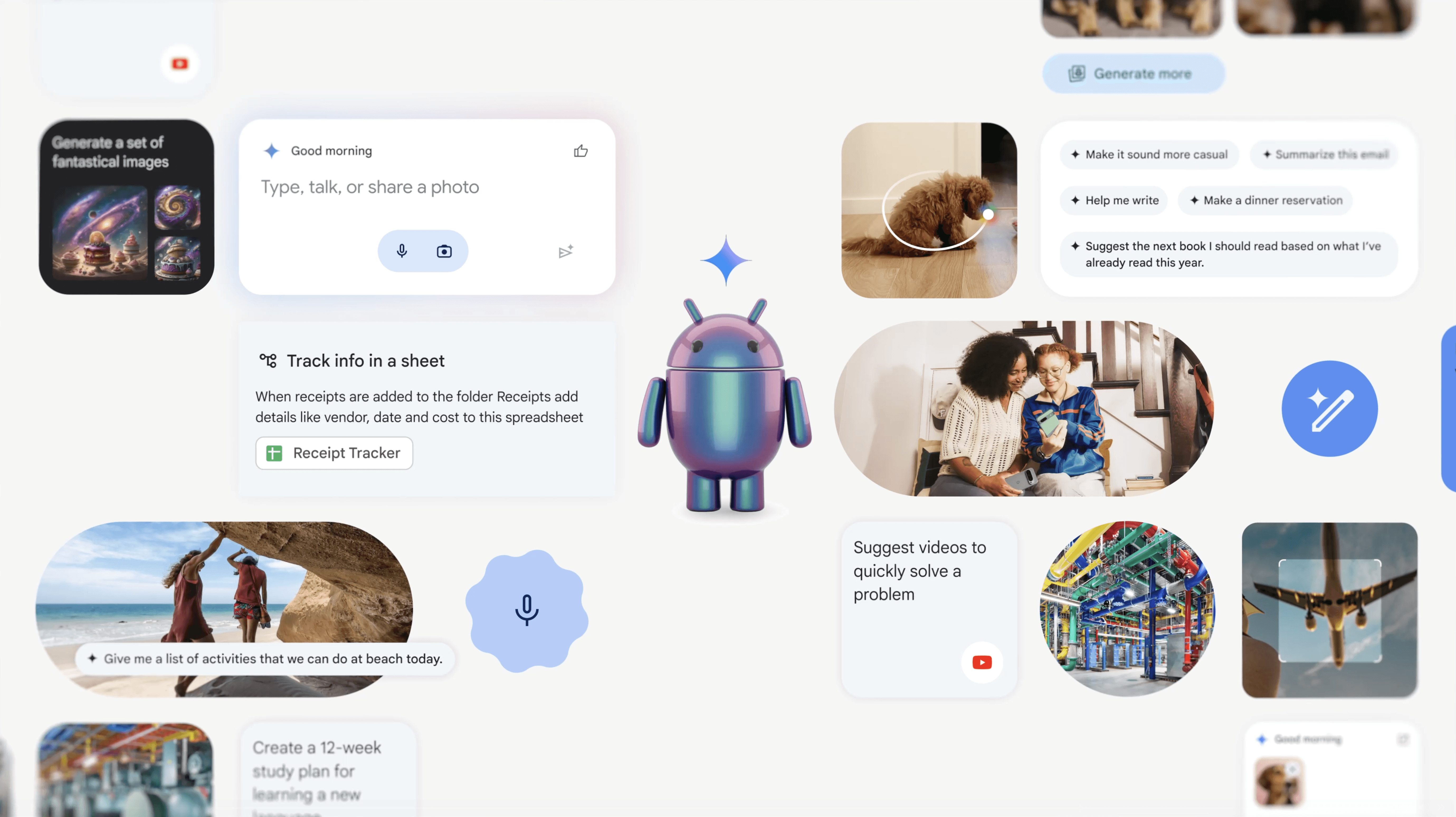
Google. Defining a first-of-its-kind Ambient AI for 1 Billion Users.

B2C, Artificial Intelligence (AI), Operating System, Human-AI Interaction Design
Lead Product Designer

Lead Product Designer

B2B payment dashbaord highlighting the customisation and personalisation users can add to the Payments List
Business impact

Set to impact over 1 billion Android users, this innovative vision for AI storytelling secured crucial executive buy-in and alignment on roadmaps across Google. When launched, it will deliver a more contextual, personalised and intelligent experience on their phones. 

*Due to confidentiality, further specifics cannot be shared.

Challenges Overcome*

*Due to confidentiality, further specifics cannot be shared. *Due to confidentiality, further specifics cannot be shared. *Due to confidentiality, further specifics cannot be shared.

Customer benefits*

Also very cheeky of you

Further specifics cannot be shared.

Due to confidentiality, further specifics cannot be shared.

Further specifics cannot be shared.

Checkout.com. Architecting the Intelligent Payment Workspace.

Enterprise Ecosystem, Fintech Infrastructure, System Architecture, Intelligent Interfaces

Staff Product Designer

Staff Product Designer

Business impact

Commercial Unlock: Secured 26 new Enterprise merchants post-launch, supporting hundreds of millions in processed volume.

Revenue Protection: Neutralised a primary churn risk by bringing the platform to parity with market leaders, directly impacting merchant retention.

Market Expansion: Unlocked the SMB segment—previously excluded by complexity—by transforming the product into a configurable sales asset.

Operational Velocity: Collapsed Time-to-Resolution from minutes to seconds for critical payment tasks.

This overhaul drove significant growth across both Enterprise and SMB segments, with improved merchant retention and a strong surge in SMB acquisitions — 76 new merchants — resulting in substantial revenue gains for Checkout.com.

Challenges Overcome

Teams that had previously competed for pixels needed to align around a shared system that served the user, not internal politics. I facilitated that alignment. But the deeper problem was what I came to call Contextual Blindness: static interfaces that treated every payment state identically, forcing users to hunt for relevance. A successful transaction and a fraud flag surfaced the same tools in the same layout. I architected a polymorphic interface that physically reconfigures based on payment state, surfacing reconciliation tools for clean transactions, customer intelligence for disputes, and risk signals for flagged accounts.

The technical challenge was the Density Paradox: enterprise merchants demand data density, but cognitive overload kills usability. I solved this through progressive disclosure and a flexible widget architecture that scales complexity to user need. And throughout, I resisted internal pressure to "fast follow", to simply copy competitor dashboards and ship quickly. I argued instead for a bespoke architecture designed around our specific commercial advantage: the depth of transaction intelligence that only Checkout.com could surface.

Customer benefits

Reduced fraud detection from minutes to seconds, allowing merchants to act on threats before they escalate.

Surfaced hidden failure patterns through new data visualisations, shifting merchants from reactive firefighting to proactive oversight.

Made complex financial data accessible to novice users, enabling broader teams to manage risk without specialist training.

Eliminated constant context-switching by bringing actions directly to the data, keeping merchants in flow and resolving issues faster.

National Australia Bank. Elevating mobile banking for 10 Million Aussie customers.

B2C, Banking Infrastructure, iOS & Android App, A11Y & Inclusive Design

Lead Product Designer

Lead Product Designer

Business impact

Market Repositioning: Transformed the lowest-rated banking app in Australia into a category leader—App Store rating rose from 2.8 to 4.7 stars.

Competitive Response: Closed a critical gap with market leaders, neutralising design quality as a churn factor.

Organisational North Star: Established the design ceiling for NAB's entire digital ecosystem. The website and all digital products now follow the direction I set.

Accessibility as Advantage: Proved that high-craft visual design and WCAG accessibility are not trade-offs—delivering both in a single, cohesive experience.

Challenges Overcome

Years without meaningful investment had produced inconsistent patterns, outdated visual language, and accessibility failures that didn't represent the brand or meet modern expectations. Worse than the technical debt was the cultural debt: internal skepticism and a "good enough" mindset that treated incremental improvement as the ceiling.


I bypassed that inertia by building a high-fidelity Vision Prototype — not a roadmap deck, but a tangible future state that C-Suite stakeholders could experience directly. It collapsed months of incremental debate into alignment. And within that vision, I challenged the industry assumption that beautiful design compromises accessibility. The prototype proved they reinforce each other when craft is prioritised.

Customer benefits

Restored customer confidence through a modernised visual language that signals security, competence, and market leadership.

Designed for every user from the start, not retrofitted for compliance—removing barriers that previously excluded customers with accessibility needs.

Reimagined pivotal brand moments as personalised onboarding experiences, guiding customers rather than leaving them to figure it out.

Simplified hierarchies and clear typography reduced the mental load of complex tasks, making everyday banking feel instant.

Nebula Insurance. Designing the future of Insurtech from 0 → 1.

B2B, Insurtech, 0 to 1 Start-up, End-to-end Experience Design

Principal Product & Brand Designer

Principal Product & Brand Designer

A collection of brand mocups showing the logo consistently in the centre
Business impact

Fundable by Design: Translated founder vision into investable artefacts. My prototypes and pitch materials were the primary evidence that secured Seed funding from QBE Ventures.

Brand Differentiation: Steered the strategy from "safe and corporate" to "warm and human" establishing a distinctive competitive position in a commoditised, low-trust market.

Operational Foundation: Delivered a complete design system and developer-ready libraries enabling engineers to build the MVP without design debt or ongoing dependency.

Challenges Overcome

Traditional insurance operates as a black box; it demands data before offering any value, training users to expect extraction rather than exchange. I originated what I called Reciprocal Data Flow: the moment a user enters a business address, they receive immediate risk insights. Trust is built through value exchange, not forms.


But visibility couldn't stop at the quote. Commercial insurance eligibility is opaque by design, businesses don't know why they're rejected or how to improve. I originated the Insurance Health Score: a visible, gamified metric that demystifies underwriting criteria and gives businesses a clear path to improve their risk profile. And throughout, I steered product definition away from the industry default of long, dense forms toward progressive disclosure, breaking complex underwriting into intelligible, bite-sized steps.

Customer benefits

Users receive risk insights—like location-specific hazard maps—before filling a single form. Trust earned through giving, not gatekeeping.

The Health Score transforms dense underwriting into clear, actionable steps—users always know where they stand and what to do next.

Replaced weeks of manual underwriting with tailored quotes delivered in moments—speed that matches modern expectations.

A warm, conversational tone that removes the intimidation factor from buying commercial cover.

Checkout.com. Productising the Service Layer to Unlock $200M in Recurring Revenue

Enterprise Ecosystem, Fintech Infrastructure, Self-Serve Architecture

Staff Product Designer

Staff Product Designer

Business impact

Revenue Unlocked: Unlocked $200M+ in Annual Recurring Revenue by removing manual gatekeepers and democratising access to payment products.

Cash Flow Acceleration: Collapsed Time-to-Revenue from 3 weeks (often 6 months) to under 24 hours — accelerating cash flow for merchants and the business.

Operational Leverage: Productised a manual service, deflecting thousands of hours of admin work and enabling scale without unsustainable hiring.

Market Expansion: Automated onboarding reduced the "Cost to Serve," making it profitable to serve the SMB segment — previously unsustainable under the "White Glove" model.

Challenges overcome

This wasn't assigned work. I identified the bottleneck by auditing service logs — proving that manual processes were killing 50% of revenue opportunities. I built the case for a strategic pivot before leadership knew they needed it. Sales leadership pushed back initially: "Self-serve won't work for enterprise merchants." I reframed the initiative as productising the service, not removing humans and secured executive sponsorship by demonstrating how automation would accelerate deals rather than cannibalise them.

The operational reality was brutal. Internal teams relied on fragile manual checks against thousands of spreadsheet rows. I led the design of a Visual Eligibility Engine to productise that logic into algorithmic decision-making. And when it came to measuring success, I rejected vanity metrics like Time-to-Onboarding, optimising for form completion speed would create fast signups but weeks-long revenue delays. I defined Time-to-Revenue as our north star: the velocity from merchant decision to first dollar processed. When a measure becomes a target, teams game it. We chose a metric that couldn't be gamed without actually delivering value.

Customer benefits

Empowered merchants to scale their payment stack independently, adapting to market demand instantly.

Removed the lag between decision and activation, enabling immediate revenue generation

Eliminated administrative friction and "email tag," allowing teams to focus on strategy rather than paperwork.

Replaced "Black Box" uncertainty with transparency and expert guidance, empowering merchants to make bolder commercial moves.

Let's craft a better internet.

Lets craft a better internet.

Resume

LinkedIn

hello@alexandebyrne.com

Resume

LinkedIn

hello@alexandebyrne.com